
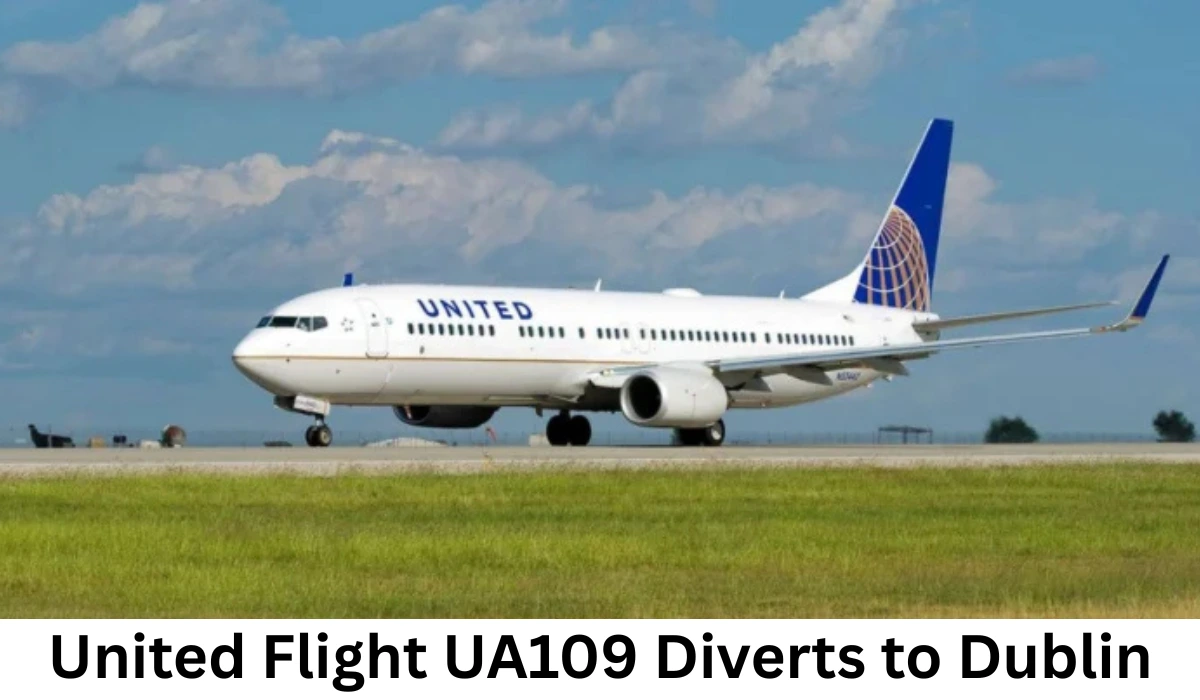
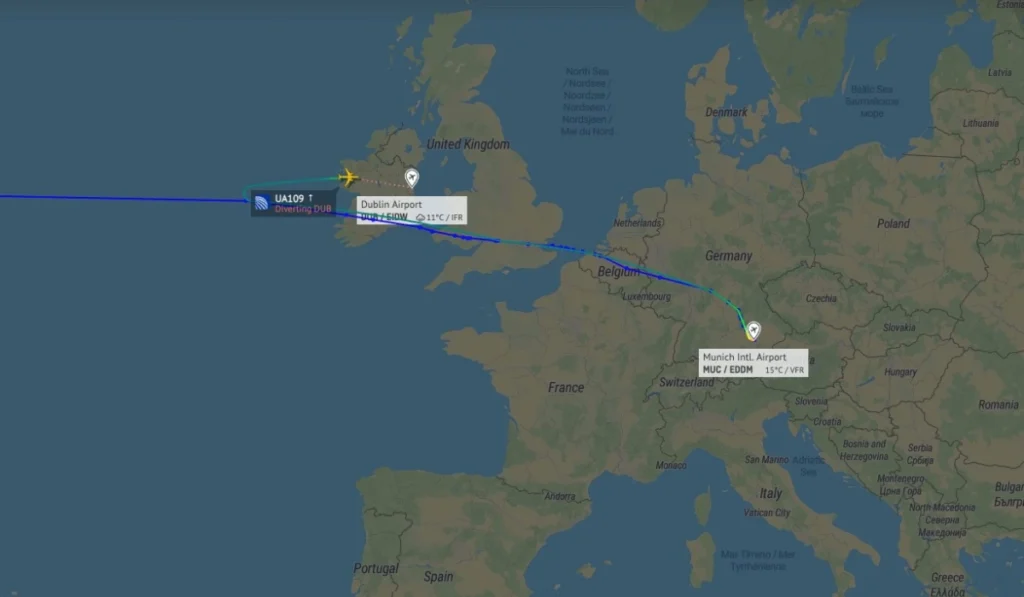
DUBLIN — A United Airlines flight en route from Munich (MUC) to Washington Dulles (IAD) was forced to divert to Dublin Airport (DUB) on October 30, 2025, after a crew member became incapacitated mid-flight. The Boeing 787-8 Dreamliner (registration N28912) landed safely in Ireland, where it was met by medical personnel.
The aircraft was approximately three hours into its journey and cruising 600 nautical miles west of Ireland when the decision was made to turn back. According to preliminary reports, a flight attendant developed an acute medical condition that severely impacted their mobility. While early unconfirmed reports suggested the issue stemmed from a severe foot ailment, the airline has not publicly released specific medical details, citing privacy protocols.
While a single crew member’s illness might seem manageable, aviation regulations mandate strict minimum crew-to-passenger ratios—typically one flight attendant for every 50 seats. These ratios are critical for safety, particularly for emergency evacuations and firefighting duties. If a crew member becomes incapacitated, the flight may no longer meet the legal requirements to continue across the Atlantic, where the aircraft would be hours away from the nearest diversion point.
The flight crew executed a U-turn over the North Atlantic and landed in Dublin at approximately 3:00 PM local time. Passengers remained onboard during the stopover while the affected crew member was transferred to medical care.
United Airlines prioritized a quick turnaround, and the flight was able to resume its journey to Washington Dulles later that afternoon with a replacement crew plan or adjusted staffing, resulting in a moderate delay rather than a cancellation.
The diversion underscores the “safety first” nature of transatlantic operations.
Dublin Airport frequently serves as a critical ETOPS (Extended-range Twin-engine Operations Performance Standards) alternate for flights crossing the Atlantic, providing a safe haven for aircraft dealing with medical or mechanical emergencies before entering oceanic airspace.