
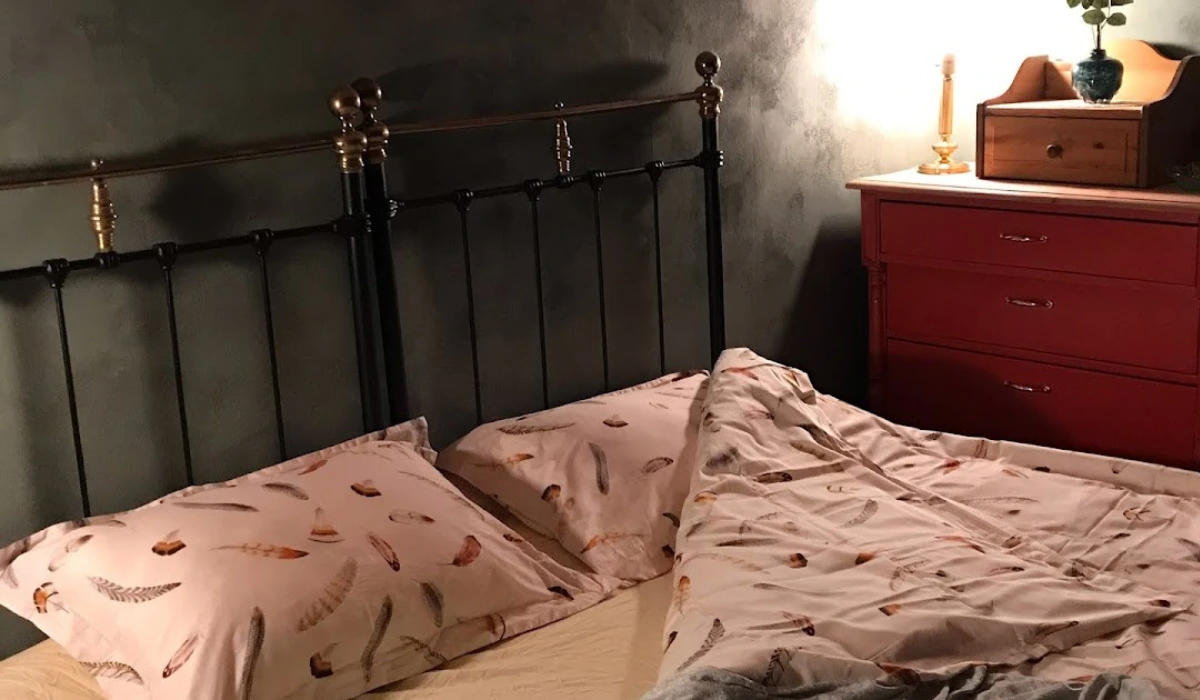
Jernsenger, the Norwegian term for iron beds, represents furniture craftsmanship spanning from ancient civilizations to modern design. These distinctive bed frames made from wrought iron or cast iron originated in ancient Egypt and Greece as luxury items, becoming widely popular during the Victorian era when the Industrial Revolution made them accessible to middle-class households across Europe and North America.
Victorian iron beds featured elaborate scrollwork, floral motifs, geometric patterns, and decorative finials created by skilled blacksmiths using traditional forging and casting techniques. Birmingham manufacturers in England, including Hoskins and Sewell, produced most British iron beds with wooden or porcelain castors allowing easy movement for bedroom cleaning. Each handmade piece carried unique characteristics, making them valuable as both functional furniture and artistic artifacts.
Health considerations drove iron bed popularity in the nineteenth century when diseases like tuberculosis and cholera spread rapidly in urban areas. Wooden beds harbored bedbugs and pests due to porous surfaces, while iron beds offered hygienic alternatives with non-porous metal easily cleaned and disinfected. This made iron beds particularly common in hospitals and medical facilities where sanitation remained crucial. Iron construction prevented warping and splitting issues affecting wooden furniture.
Wrought iron’s malleability allowed intricate hand-forged designs with flowing curves, while cast iron production used molds for uniform patterns and detailed decorative elements. Both materials provided exceptional durability supporting substantial weight without damage. Design styles evolved through Art Nouveau with bold curves, Art Deco with geometric elegance, Depression Era austere functionality, and Craftsman style focusing on solid construction.
French iron beds positioned mattresses approximately eight inches from the ground compared to fifteen inches for English beds, emphasizing romantic styling with curved lines. Italian manufacturers created cleaner designs focusing on form over ornamentation. Norwegian traditions reflected Scandinavian principles emphasizing durability and functionality, with jernseng literally translating as iron bed. Norwegian manufacturers created sturdy beds for harsh climates with simpler designs aligning with Nordic aesthetic preferences.
Victorian catalogs promoted beds in white enamel fashionable in the eighteen nineties, plus vivid art colors like emerald green. Some featured gold detailing, decorative collars, and hand-painted embellishments. Original paintwork remains rare and valuable. Mid-twentieth century saw iron beds primarily in institutional settings, but the nineteen eighties Victorian revival renewed residential interest continuing today with antiques and reproductions available.
Modern iron beds blend traditional craftsmanship with contemporary aesthetics. Industrial chic popularized raw unfinished metal beds for urban lofts, while minimalist designs feature clean lines and geometric shapes. Contemporary manufacturers offer customization including various finishes, sizes, and decorative elements maintaining durability and elegance.
Purchasing antique iron beds requires evaluating original castors indicating authenticity, as dealers often removed these in the nineteen eighties. Beds with original brass fittings hold greater value than replacements. Original paintwork should be preserved for historical authenticity. Restoration varies by condition, with badly chipped paint requiring shot blasting before repainting, while minor chips can be filled with metal paint. Some collectors prefer retaining original patina demonstrating authentic age.
Antique values vary by condition, provenance, design complexity, and completeness. Simple utilitarian frames command lower prices than elaborate Victorian pieces with intact brass fittings and original paint. Beds with documented history bring premium prices. Complete beds with original side rails and metal studs hold greater value than frames with missing components.
Storage capabilities make iron beds practical in modern settings. Elevated frames create space for storage drawers, baskets, or containers underneath. Custom underbed drawer systems provide organized storage for linens and seasonal items, making iron beds suitable for smaller bedrooms. Original Victorian beds were made for smaller mattresses, so dealers convert vintage doubles to fit modern queen or king sizes while maintaining symmetry and design integrity through careful metalworking.
Four-poster iron beds create dramatic focal points with impressive height offering grandeur without excessive bulk suitable for various room sizes. Maintenance remains minimal with regular dusting and occasional metal cleaner application. Iron beds do not suffer from warping, splitting, or insect damage affecting wood, lasting for generations as family heirlooms. This longevity makes them environmentally sustainable choices.
Cultural significance extends beyond function. Antique iron beds witnessed important life events across multiple generations, carrying historical value as tangible connections to past eras. Their presence in modern homes creates dialogue between traditional craftsmanship and contemporary living, adding depth and character to spaces. The enduring appeal demonstrates how quality design transcends temporary trends.
Contemporary markets offer authentic antiques and reproductions manufactured using traditional techniques. Buyers must distinguish between genuine period pieces and modern replicas. Authentic antiques display appropriate construction methods, period-appropriate finishes, and wear patterns consistent with age. Quality reproductions provide similar aesthetic appeal at lower costs though lacking subtle imperfections of handcrafted originals.
Global appreciation continues growing as people seek furniture with lasting value and distinctive character. International dealers specialize in sourcing, restoring, and selling antique iron beds worldwide. Online marketplaces expanded access, though purchasing remotely requires careful evaluation of photographs, measurements, and condition descriptions. Serious collectors prefer examining beds in person to assess quality and authenticity.
Iron beds complement decorating styles from traditional Victorian to contemporary minimalist. Their neutral color palette of black, white, ivory, silver, or bronze provides versatility coordinating with different color schemes and aesthetics. An iron bed serves as either a subtle background element or striking focal point depending on design complexity and finish. This adaptability explains their continued popularity across diverse interior design approaches and personal tastes.