
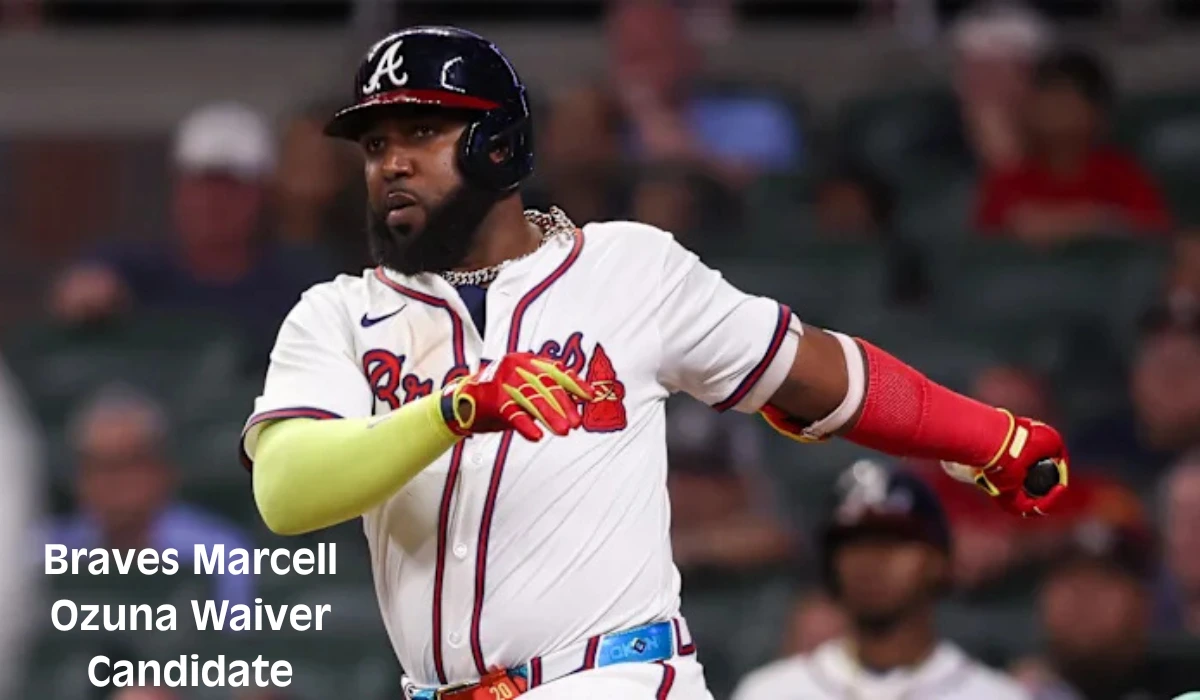
The Atlanta Braves faced scrutiny during the 2025 season when analysts suggested the team should consider placing veteran designated hitter Marcell Ozuna on waivers as part of a salary-clearing strategy. Bleacher Report identified Ozuna as a top candidate for a waiver-wire move during late summer after the Braves fell out of playoff contention, though the organization ultimately retained him through the season before he entered free agency following the campaign’s conclusion.
The speculation emerged in October 2025 when Atlanta sat approximately eight million dollars below the luxury tax threshold while simultaneously playing out the final weeks of a disappointing season. Ozuna, then 34 years old and in the final year of his contract, carried approximately two-point-five million dollars remaining on his sixteen million dollar salary. The proposal centered on the Braves releasing Ozuna to create additional payroll flexibility heading into the 2026 offseason, similar to how they had non-tendered both Griffin Canning and Ramon Laureano the previous November to save comparable amounts.
The rationale behind the waiver wire recommendation stemmed from multiple factors beyond simple salary relief. Atlanta had essentially been eliminated from postseason contention since early July, prompting the organization to prioritize playing time for younger players with futures in the franchise’s long-term plans. Ozuna’s playing time decreased noticeably during the season’s final months as the team utilized Drake Baldwin more frequently at designated hitter, particularly against right-handed pitching. The three-time All-Star started just twice over a six-game stretch in late July, signaling a shift in the team’s developmental focus.
Despite the reduced role, Ozuna demonstrated he could still contribute offensively when given opportunities. He hit two home runs off Sandy Alcantara during a late-season series against Miami, showcasing the power potential that made him valuable during previous campaigns. Through 107 games in 2025, Ozuna posted 19 home runs with an OPS-plus of 123 and a slugging percentage of .427, numbers that remained respectable despite falling well short of his production from the previous two seasons when he combined for 79 home runs.
The 2025 campaign represented a significant downturn from Ozuna’s remarkable 2023 and 2024 seasons when he established himself as one of baseball’s most productive designated hitters. He slashed .289/.364/.552 across those two years with the ninth-best weighted runs created plus in Major League Baseball at 148, earning All-Star recognition in 2024 and finishing in the top four of National League MVP voting. His 40 home runs in 2023 and 39 in 2024 made him a cornerstone of Atlanta’s offensive attack and justified the exercise of his sixteen million dollar option for 2025.
However, multiple challenges emerged throughout the 2025 season that contributed to his statistical decline. A hip injury plagued Ozuna for extended periods, sapping the power production that defined his recent success. From June onward, he struggled to maintain consistency at the plate, hitting below .200 in every month from June through September and watching his batting average plummet from .302 in 2024 to just .232 in 2025. His isolated power mark of .168 represented his lowest full-season total since his first year in St. Louis in 2018, raising questions about whether the hip issues or natural aging had permanently diminished his capabilities.
The benching situation became particularly notable during mid-July when Ozuna made just two starts across a fourteen-day span bridging the All-Star break. Nursing the hip injury and admitting to a loss of confidence at the plate, he produced a .239/.364/.396 slash line with 13 home runs through the season’s first 94 games. The extended time away apparently provided benefits as Ozuna rebounded afterward, hitting .314/.457/.829 with six home runs over his next 12 games despite a batting average on balls in play of just .208, demonstrating his ability to elevate the ball for power even when making limited contact.
Trade deadline complications added another layer to Ozuna’s situation during 2025. Reports surfaced that despite initial interest from other clubs, the Braves were unable to move the veteran slugger before the deadline. Some accounts indicated Ozuna exercised his 10-and-5 rights, which grant players with ten or more years of major league service and five consecutive years with the same team the power to veto trades, preferring to finish the season in Atlanta rather than accept a deal to a contending team. This decision may have ultimately cost him financially as his late-season slump and reduced playing time diminished his free agency value entering the offseason market.
The waiver wire discussion represented a theoretical cost-saving measure that would have allowed a contending team to claim Ozuna and pay the remaining portion of his salary while providing the Braves immediate payroll relief. Teams like the Cincinnati Reds, who ranked among the bottom third in designated hitter production during 2025, were mentioned as logical landing spots that could have benefited from adding a proven power bat for a playoff push. However, Atlanta elected to keep Ozuna on the roster through September rather than pursue the unconventional move.
As free agency arrived following the season’s conclusion, multiple analysts predicted Atlanta would decline to re-sign their longtime designated hitter. Braves general manager Alex Anthopoulos indicated the organization preferred keeping the designated hitter spot open to rotate multiple players rather than committing to a full-time option like Ozuna. This approach would allow Sean Murphy and Drake Baldwin to share duties while providing roster flexibility and reducing long-term financial commitments to aging players whose defensive limitations restrict them to designated hitter-only roles.