
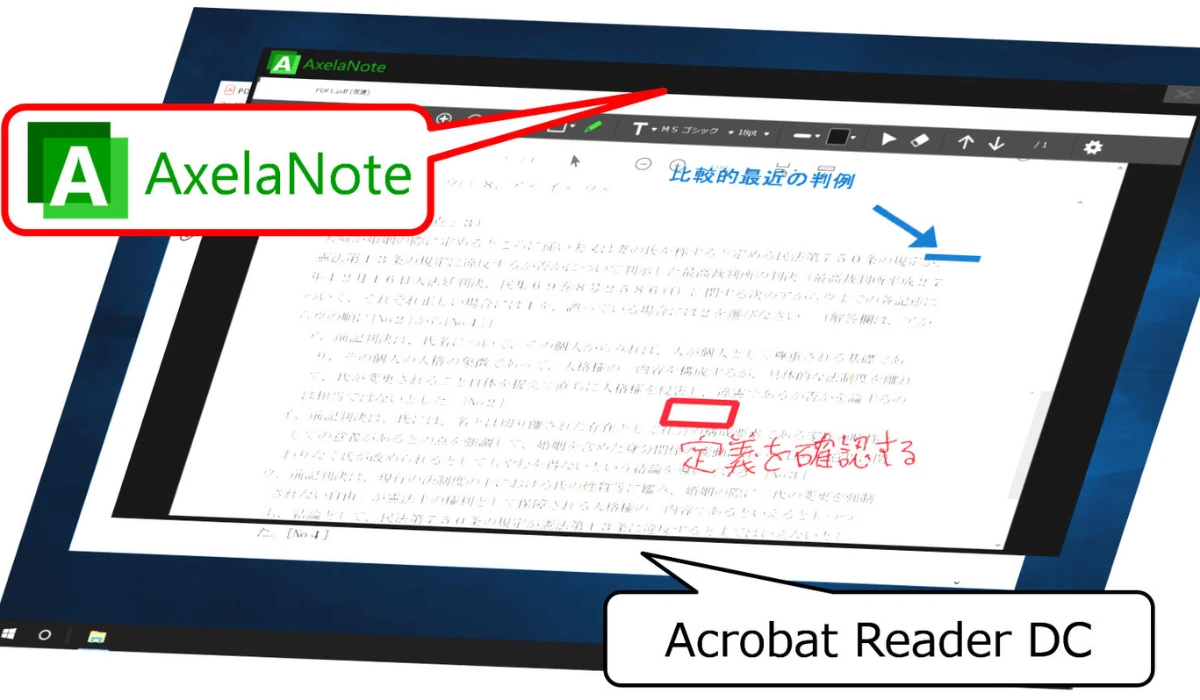
When you’re evaluating software for your business or personal workflow, pricing often feels like the deciding factor. AxelaNote—a specialized PDF editing tool from Japanese developer TransRecog—takes an interesting approach to its pricing structure that’s worth examining closely if you’re considering adding it to your digital toolkit.
The software costs ¥5,148 annually (approximately $33 USD) for a user license, or ¥7,128 annually (around $45 USD) for a device license. Before your eyes glaze over at yet another subscription model, let’s talk about what makes AxelaNote’s pricing philosophy different from the crowded PDF software market.
What strikes me first about AxelaNote’s approach is its simplicity. There aren’t multiple tiers labeled “Basic,” “Professional,” and “Enterprise” that leave you guessing which features you’ll actually need. Instead, you’re choosing between two straightforward licensing models based on how your team works—not based on feature limitations or arbitrary user caps designed to push you toward premium plans.
The user license model is designed for individuals or small teams where specific people will use the software regularly. Think about it this way: if you’re a designer who works across a desktop workstation, a laptop for client meetings, and a Microsoft Surface tablet for fieldwork, one user license covers all three devices. You’re paying for the person, not the hardware.
The device license option caters to shared workstation environments—places where multiple people might use the same computer at different times. Manufacturing facilities, hospital nursing stations, or 24/7 operations where shift workers share equipment would benefit from this approach. For instance, if your workplace has 10 employees working in shifts but only 5 are working simultaneously, you’d need just 5 device licenses rather than 10 user licenses.
Now, here’s where AxelaNote diverges from typical SaaS pricing trends. Most productivity software companies today structure their pricing to encourage continuous upgrading. They create feature gaps between tiers that feel intentional—give you just enough in the basic plan to get started, but hold back the truly useful capabilities until you pay more. It’s a strategy that works financially for software companies but can feel manipulative from a customer perspective.
AxelaNote doesn’t play that game. Whether you’re paying the individual rate or the corporate rate, you’re getting the full feature set: the transparent overlay technology that lets you annotate restricted PDFs, pen and touch support for natural writing, integration with tablet PCs, and all the productivity tools like preset phrases and automatic numbering. There’s no “unlock advanced features” upsell waiting around the corner.
The pricing also reflects something broader about software development philosophy. At roughly $33 per year for individual users, AxelaNote positions itself as a specialized tool rather than an all-in-one PDF suite trying to compete with Adobe’s ecosystem. It does one thing exceptionally well—annotating PDFs without modifying the original file—and prices accordingly.
Corporate pricing works differently, as you’d expect. Business customers purchase through authorized distributors rather than directly, with a pricing structure that differs from individual licensing. This typically means volume discounts and customized agreements based on deployment scale. If you’re looking at organization-wide implementation, reaching out to TransRecog’s sales team directly makes sense—they’ll work with you on terms that reflect your actual usage patterns.
One detail worth noting: AxelaNote offers a 14-day free trial, which gives you adequate time to test whether the transparent overlay methodology actually solves your workflow problems. This isn’t a gimmick trial that locks core features behind a paywall during the evaluation period. You’re getting the full software to genuinely assess whether it fits your needs.
The subscription model itself—annual rather than one-time purchase—aligns with contemporary software economics. Companies prefer predictable recurring revenue, and customers benefit from continuous updates and support without paying separately for major version upgrades. Whether this trade-off works for you depends on how frequently you’ll use the tool and whether its specialized capabilities justify ongoing costs.
Is AxelaNote’s pricing competitive? That depends on what you’re comparing it against. General PDF editors like Adobe Acrobat Pro cost significantly more—around $180 annually for individuals. But Acrobat is designed as a comprehensive PDF creation and editing suite. AxelaNote targets a narrower use case: professionals who need to annotate sensitive documents, blueprints, or forms without risking the integrity of original files.
For construction firms managing CAD-generated blueprints, architects coordinating across multiple contractors, or government agencies handling restricted documents, AxelaNote’s pricing represents cost-effective insurance against accidentally modifying protected files. The annual cost per user is negligible compared to the potential consequences of damaging original documents or violating document security protocols.
The value proposition ultimately comes down to specificity. If you’re dealing with annotation-restricted PDFs regularly—whether due to security policies, legal requirements, or simply because you’re working with files from external sources—AxelaNote solves a problem that standard PDF editors can’t address at any price point.
At around $33 per year for individual users, the barrier to entry is low enough for professionals to justify the expense without requiring management approval. For organizations evaluating enterprise deployment, the device licensing option provides flexibility that respects how teams actually work rather than forcing artificial constraints based on how many email addresses you want to register.
In an era where software pricing often feels designed to extract maximum revenue through psychological manipulation and feature withholding, AxelaNote’s straightforward approach feels refreshingly honest. You’re paying for a specialized tool that does exactly what it promises, with pricing that reflects its focused purpose rather than aspirational feature bloat.