
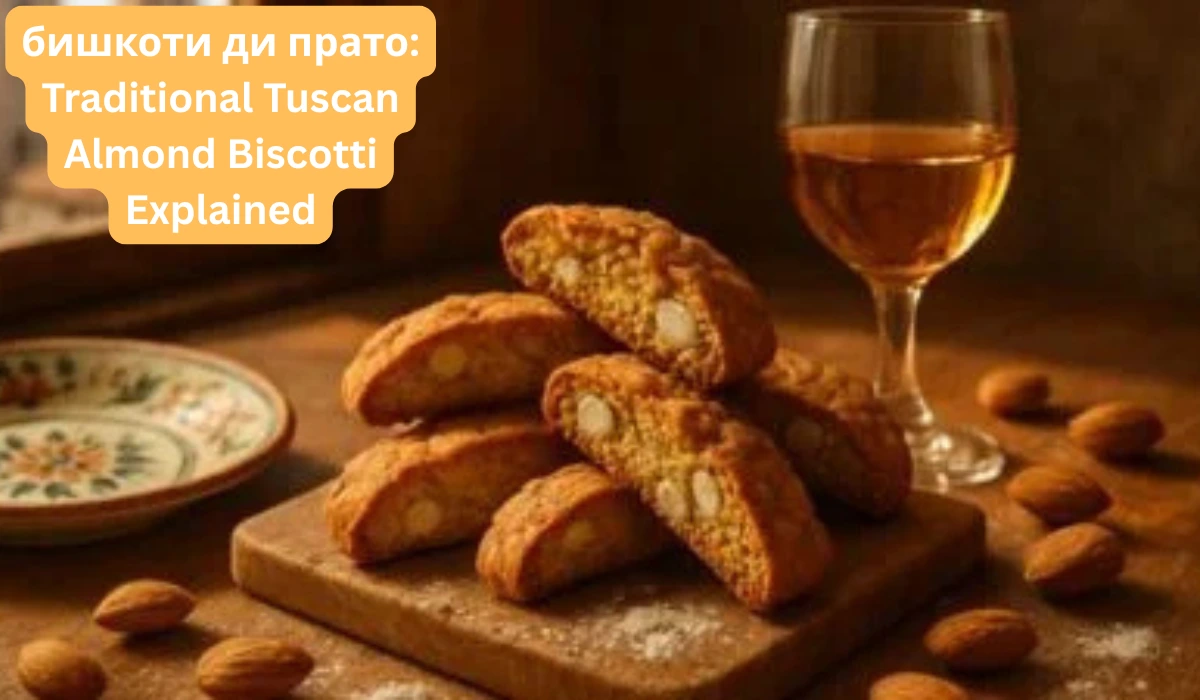
Бишкоти ди Прато represents the traditional twice-baked almond biscuit originating from the historic town of Prato in Tuscany, Italy. According to culinary historians, these iconic Italian cookies date back to at least the 17th century, with some references suggesting origins in the 14th century. The biscuits are known in Italian as Biscotti di Prato or cantuccini, with the term deriving from Latin “bis coctum” meaning twice-baked, a technique originally developed to create long-lasting bread for travelers and soldiers.
The authentic recipe contains just four essential ingredients: flour, sugar, eggs, and whole unblanched almonds. According to traditional Tuscan baking practices, no butter or oil is used, which contributes to the firm, crunchy texture and remarkably long shelf life. The absence of fats allows the biscuits to stay fresh for weeks when stored in airtight containers at room temperature. Some modern variations incorporate pine nuts, though almonds remain the signature ingredient defining the classic Prato style.
The distinctive double-baking process sets бишкоти ди Прато apart from regular cookies. Bakers first shape the dough into long logs approximately five centimeters wide and bake them at 180 degrees Celsius for about 25 minutes until golden. After cooling briefly, the logs are sliced diagonally into individual pieces and returned to the oven for 10 to 15 minutes until completely dry and crisp. This two-step method creates the signature crunch that allows the biscuits to be dunked into beverages without disintegrating.
In Tuscan tradition, бишкоти ди Прато are served with Vin Santo, a sweet dessert wine made from dried grapes. According to cultural practices, diners dip the firm biscuits into the golden wine, which softens the texture while releasing the roasted almond aroma and enhancing flavors. The pairing represents more than refreshment; it symbolizes Tuscan hospitality and communal bonding. Modern consumption has expanded globally, with the biscuits now commonly paired with espresso, cappuccino, tea, or hot chocolate in cafes worldwide.
The Biscottificio Antonio Mattei bakery, established in Prato during the 19th century, remains the most famous producer. According to historical records, Mattei’s bakery still operates today, selling бишкоти ди Прато in their signature blue paper packaging that has become a recognizable symbol of Prato’s culinary heritage. The bakery’s traditional recipe has changed little since the 1800s, maintaining the authentic preparation methods that made these biscuits famous throughout Italy and beyond.
Contemporary variations have emerged while respecting traditional foundations. Modern bakers experiment with chocolate-dipped versions, substituting pistachios or hazelnuts for almonds, adding dried fruits like cranberries or apricots, and incorporating spices such as cinnamon or cardamom. Some health-conscious adaptations replace sugar with natural sweeteners or create gluten-free versions using alternative flour blends. Despite these innovations, the classic almond бишкоти ди Прато remains the most beloved version, embodying centuries of Tuscan baking tradition and representing edible heritage that connects generations through simple ingredients, meticulous craftsmanship, and timeless appeal.