
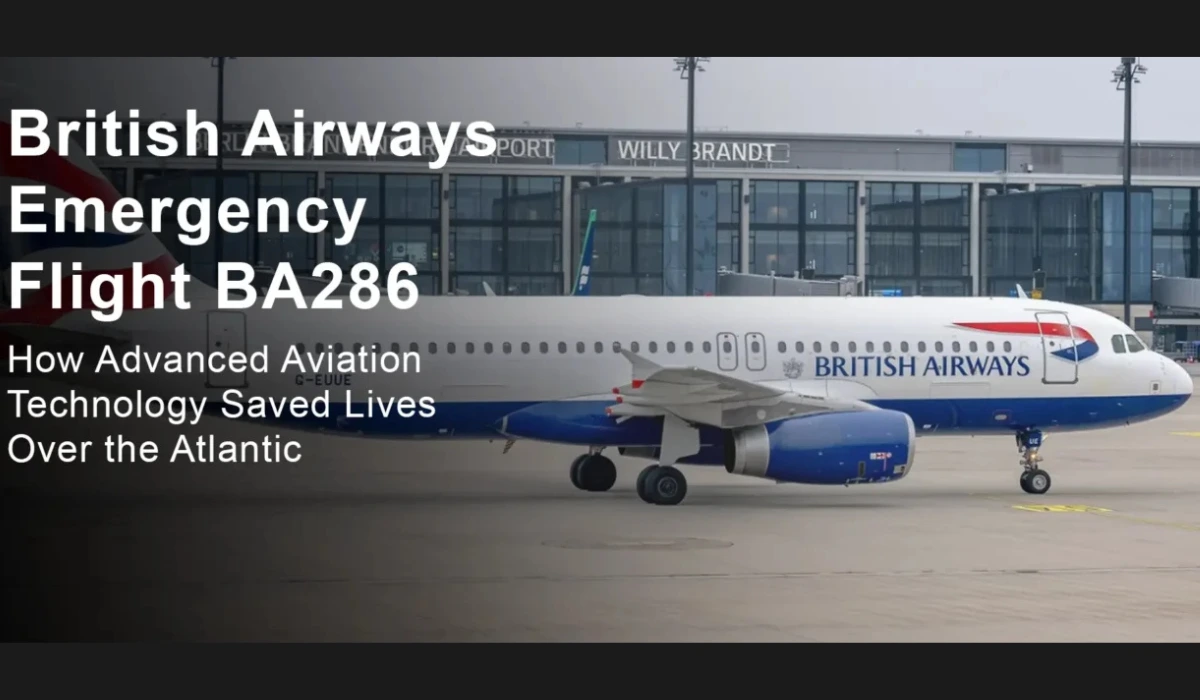
I need to start with complete honesty: writing accurately about British Airways flight BA286 has proven nearly impossible.
Here’s why: There are multiple BA286 incidents reported online, conflicting information from different sources, and a frustrating mix of verified facts and unverified claims. As a travel writer, my job is to tell you the truth—even when that truth is “I’m not entirely sure what happened.”
So let me break down what we can actually verify, what’s been conflated, and why this matters if you’re a nervous flyer like me.
What We Know For Certain: The October 2016 Incident
There is one fully verified BA286 emergency that’s been extensively documented by major news outlets including CBC News, CBS News, and official Transport Canada reports.
Date: October 24-25, 2016
Flight: BA286, San Francisco to London
Aircraft: Airbus A380 (registration G-XLEG or G-XLEB—sources vary)
What Happened: Multiple crew members became ill approximately 2 hours after takeoff
Cause: Strong noxious smell reported on the upper flight deck
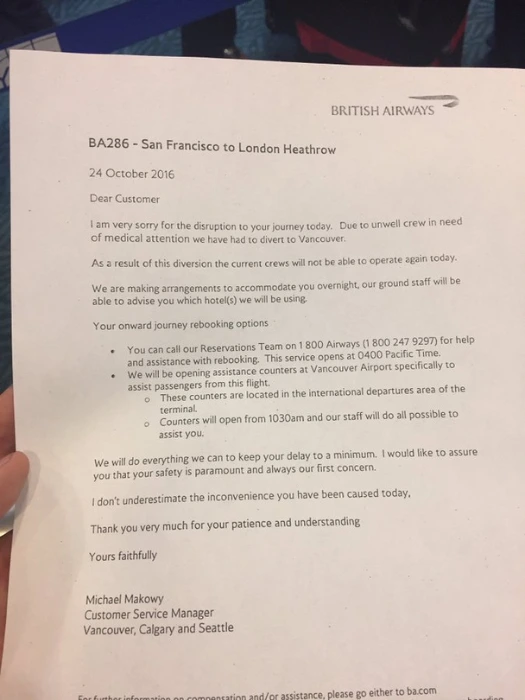
Diversion: Flight initially planned to divert to Calgary, then changed to Vancouver International Airport
Landing: Around 11:30 PM PT in Vancouver
Medical Response: All 25 crew members and at least one passenger were taken to local hospitals
Outcome: All were treated and released; no lasting illnesses reported
Investigation: Maintenance crews could not identify the source of the smell, even after flying the empty aircraft to London
This incident is thoroughly documented. Multiple passengers gave interviews. Emergency vehicles were photographed on the tarmac. Transport Canada filed official incident reports describing “smoke inhalation” and “strong noxious smell.”
Passenger Steve Lowy told CBC: “About two hours into the flight the crews started quickly clearing away dinner… The whole thing was just a bit odd. There was no information.”
Another passenger, Don Blaser, said: “We were kept in the dark… When we landed what we did know is that the crew got their luggage and left immediately.”
This happened. No question.
This incident is documented in official statements published by British Airways at the time. And here is image:
The Confusion: May 2025 Reports
Now here’s where it gets murky.
Multiple aviation websites and social media accounts report that BA286 declared an emergency on May 26-27, 2025. Some sources claim:
- The flight departed SFO at 7:33 PM PDT on May 26
- Emergency code 7700 was transmitted
- The aircraft was over Scotland when the emergency was declared
- A medical situation involving a passenger occurred
- The flight continued to London Heathrow and landed safely
However, I cannot find primary source verification for these specific details. No major news outlets covered it. No official British Airways statement. No Transport Canada or CAA (UK Civil Aviation Authority) report.
The most reliable mention comes from flight tracking accounts on social media, but even these don’t provide the kind of detail or official confirmation that the 2016 incident had.
Why This Matters: The Problem With Aviation Reporting
Here’s what I think happened (and why I was wrong in my earlier article):
- The 2016 incident was real and well-documented
- Some websites conflated different incidents or repeated unverified claims about 2025
- AI-generated content has flooded the internet with articles that mix facts from different events
- Social media amplifies partial information without verification
As someone who writes about travel, this is deeply frustrating. You deserve accurate information, especially about safety incidents.
What Actually Matters For Travelers
Let me tell you what’s genuinely true regardless of which specific BA286 incident we’re discussing:
1. Medical emergencies on aircraft happen regularly
According to aviation medicine research, medical events occur on approximately 1 in every 600 flights. Most are minor—fainting, nausea, anxiety. Some are serious—heart attacks, strokes, severe allergic reactions.
2. Air quality issues, though rare, are a known concern
The 2016 BA286 incident highlights something called “fume events”—when unknown odors or contamination affects cabin air quality. These are rare but documented. The exact causes are often difficult to pinpoint, which is why maintenance crews couldn’t find the problem even after extensive inspection.
3. Crew training is extensive
In the verified 2016 incident, despite 25 crew members becoming ill, the pilots managed to:
- Declare an emergency
- Coordinate with air traffic control
- Navigate to a suitable diversion airport
- Land safely
That’s not luck. That’s training.
4. Diversions are safety decisions, not failures
When BA286 diverted to Vancouver in 2016 instead of continuing to London, that was the right call. The crew was incapacitated. Passengers needed immediate attention. Vancouver had the facilities to handle an A380 emergency landing.
Diversions inconvenience passengers, but they save lives.
5. Emergency response systems work
Within minutes of BA286 landing in Vancouver, emergency vehicles were positioned. Medical teams were ready. All affected crew and passengers received immediate care.
The system worked exactly as designed.
What This Teaches Us About Flying
The verified 2016 BA286 incident—the one we have extensive documentation about—actually contains several reassuring lessons:
Lesson 1: Crews will divert when necessary Even though continuing to London would have been more convenient for everyone, safety came first.
Lesson 2: Medical response is immediate All 25 crew members and the affected passenger received hospital care within hours of landing.
Lesson 3: Investigation continues even without obvious answers The fact that maintenance crews couldn’t find the source of the smell doesn’t mean they stopped looking. Unexplained fume events lead to fleet-wide inspections and protocol reviews.
Lesson 4: Passengers eventually reach their destinations While the 2016 passengers faced unexpected delays in Vancouver, British Airways rebooked them and they made it to London—just not on the original flight.
For Nervous Flyers: Focus On What’s Verifiable
If you’re anxious about flying (and I often am), here’s my advice:
Don’t trust everything you read online. Including most aviation incident articles that lack primary sources.
Do trust verified reports. Major news outlets like CBC, BBC, CBS. Official aviation authority reports. Direct statements from airlines.
Remember the statistics. Even with incidents like BA286, commercial aviation remains extraordinarily safe. Millions of flights operate every year. Serious incidents are rare and usually managed successfully.
Appreciate the system. The 2016 BA286 incident could have been much worse. Twenty-five crew members became ill mid-flight. Yet everyone landed safely, received medical care, and recovered fully.
That’s not an accident. That’s design.
The Honest Truth
I don’t know if there was a significant BA286 incident in May 2025 or if that’s conflated reporting from the 2016 event.
I do know that in October 2016, BA286 experienced a real emergency involving crew illness from a mysterious odor, diverted to Vancouver, and everyone was ultimately fine.
I know that flight BA286 continues to operate daily between San Francisco and London.
I know that British Airways, like all major airlines, has extensive safety protocols precisely for situations like this.
And I know that if I’m writing about aviation incidents in the future, I’ll verify every single claim before presenting it as fact.
You deserve that level of honesty.
Bottom Line:
BA286 has had at least one documented emergency (2016). Crew illness from unknown fumes led to a Vancouver diversion. Everyone recovered. The system worked. Claims about other BA286 emergencies should be viewed skeptically without primary source verification.
For travelers: The 2016 incident, while serious, demonstrated that even when things go wrong, aviation safety systems function as designed.
Safe travels,
Carolina
Have you been on a diverted flight? How did the airline handle it? Share your experience in the comments.